

Skip to content Skip to footer

About The Book

MIND THE GAP

Every quarter, your organization hemorrhages knowledge, momentum, and profit. This happens because your leadership tools were designed for 1920s factory floors, yet you are running a 21st-century knowledge business. You are using a century-old operating manual to navigate a digital-speed world.

Mind the Gap is not a “feel-good” manifesto about being nicer at work. It is a financial strategy, a structural blueprint, and a behavioral toolkit. Duncan Brand spent two decades in the trenches: from hospital boardrooms to tech giants. He identified the invisible rupture between rigid oversight and unleashed human potential. This book closes that gap.

KEY TAKEAWAYS

The Reality Check Audit: Use Chapter 1 to reveal if your team is genuinely committed or just quietly compliant.

The CFO-Ready Business Case: Translate “people-first leadership” into a risk-mitigation strategy your board will actually fund.

The Velocity Network: Replace static org charts with a lattice of growth pathways that keep your best performers moving forward inside your company.

The Trust Battery: Master the framework that fuels speed, autonomy, and innovation.

People
0+

Adipiscing elit, do eiusm.

Countries
0

Sed eiusmod tempor.

DUNCAN BRAND

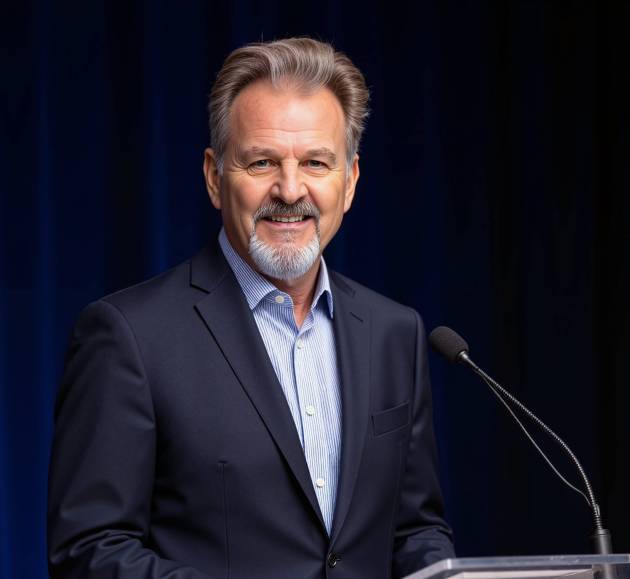
The author became the person leaders call when engagement scores flatline and key performers resign. He founded Intrinsic Leader to prove that leadership is not about tightening bolts on a plant (it is about creating the environment where the plant can grow). Mind the Gap is the condensed practice of hundreds of organizational resets. It is not theory. It is logistics.

d4dfe1a8-280a-4f39-8443-83d595a8972c (1)

About The Author

Duncan Brand has spent twenty years inside the organizations where talent dies quietly. Not through layoffs, but through the slow erosion of trust. He did not start as a consultant but started as a witness to the machine. He watched capable people get hollowed out by systems designed for compliance rather than growth. After twenty years in hospital boardrooms and federal agencies, he realized the industry did not matter: the fracture was always the same.

About The Book

About The Book

Sed ut perspiciatis unde omnis iste natus error sit voluptatem accusantium doloremque laudantium, totam rem aperiam, eaque ipsa quae ab illo inventore veritatis et quasi architecto beatae vitae dicta sunt explicabo. Nemo enim ipsam voluptatem quia voluptas sit aspernatur aut odit aut fugit, sed quia consequuntur magni dolores eos qui ratione voluptatem sequi nesciunt.

Sed ut perspiciatis unde omnis iste natus error sit voluptatem accusantium doloremque laudantium, totam rem aperiam, eaque ipsa quae ab illo inventore veritatis et quasi architecto beatae vitae dicta sunt explicabo. Nemo enim ipsam voluptatem quia voluptas sit aspernatur aut odit aut fugit, sed quia consequuntur magni dolores eos qui ratione voluptatem sequi nesciunt.

He Wrote This Book Because He Watched Good

Get the diagnosis, the scripts, and the 90-day plan to bridge that distance for good.

You say “you cannot manage people.” Is that just a provocation?

It is a necessary distinction. You must manage work (budgets, timelines, and logistics), but you lead people. If you try to “manage” a human being like a piece of equipment, you get compliance. If you want commitment, you need a different toolset.

What is the “Industrial Hangover”?

It is the structural reality of modern offices still running on 1911 factory models. Look at your performance reviews and rigid hierarchies: that is the hangover. We dragged a manual-labor mindset into the knowledge economy, and it is costing us trillions.

Is the 90-day Playbook really that detailed?

Yes. It includes scripts for the “Old Guard” and templates for “Failure Fridays.” It is built to survive the moment your managers return to their busy desks and high-pressure deadlines.

People
0+
Projects
0
Years
0+
Landmarks
0

Testimonials

It’s A Masterpiece For Readers

“Mind the Gap” does exactly what the title says. This is a very useful blueprint for how managers’ styles need to adapt to the modern world. The old methods just do not work anymore. I worked in middle management for nearly 20 years and was often in an environment of constantly being overworked and pushed to my limit. I never led with that type of manager style myself but often was pressured to do so. This takes into account that a successful operation truly has to put people first.

Duncan Brand does an excellent job breaking down the old method vs a complete blueprint for a new one. This book would be great for a person just getting started in a management role and also for anyone wanting to sharpen and improve their current leadership skills.

Amber Barnett

Amber Barnett

I felt the introduction of Mind the Gap really captured the readers attention and how right away it focused on outdated practices of the past that no longer suit our current professional workplace structure. I think the author nailed it about “quiet quitting” when workers feel that they are not being valued and their ideas are ignored or overlooked in the name of productivity and “meeting the bottom line” mentality. Also bringing up the loss of the cost of training, experience gained, and loss of morale when others have to “pick up the slack” when a valuable employee leaves and this costing a company. I liked how the author gave examples throughout the book and various stages of what they were explaining and why that isn’t working but then showed how those practices, with a little tweaking and more focus on the people part, were a much better fit and had more success. I feel this book would be an excellent tool for all stages/levels of management, to be used as a learning tool for new managers and as a refresher for current management that might have lost sight of what is important and how to go about achieving success for their business but more importantly with their staff who makes the business successful.
Patrick Luckey

Patrick Luckey

refreshing, forward-thinking guide for any leader who feels their team is just “going through the motions.” Brand argues that “employee-centric” models often treat workers like assets to be managed or boxes to be checked, which leads to burnout and low engagement. The book pushes for a “people-centric” shift, where you treat staff as whole human beings with lives outside of work. It’s packed with practical steps for building trust, encouraging open dialogue, and developing leaders at every level rather than just at the top. I liked how it moves past corporate buzzwords to offer real tools for transforming a stale culture into one fueled by genuine commitment. It’s a short, punchy read that reminds us that when people feel truly seen and valued, the business results usually follow.
Marie

Marie

Duncan Brand’s MIND THE GAP: How Organizations Can Become People Centric vs. Employee Centric was a pretty refreshing and engaging read. If you’re someone who’s spent time in the corporate world, either as a leader or someone being “managed,” you’ll probably nod along to a lot of what Brand is explaining. The main idea is the shift from treating people like cogs in a machine (employee centric) to actually seeing and valuing them as individuals with their own lives, aspirations, and contributions (people centric). Brand lays it out in a way that feels very practical and human. He speaks about inspiring, empowering, and genuinely connecting with the people in your organization. It’s about understanding their motivations, creating their growth, and an environment where they want to be their best, not just have to be. The book felt like a gentle but firm reminder that the “old school” ways of command and control are a bit outdated and, more importantly, less effective. Brand seems to be genuinely invested in helping leaders build workplaces that are both productive and fulfilling. Seeing the “gap,” as he calls it, between where many organizations are and where they could be if they put people at the heart of their strategy. This is the kind of book that makes you reflect on your own experiences as an employee and as a potential leader.

AV

AV

I really like this new concept of people centered as compared to employee centered. But I feel like so many other business/finance books out there hint a lot of these ideas and philosophies. Case studies are quite useful, but I do think a different approach could maybe work better. But I must say that the book is clear and concise. It does not feel like reading an article with many difficult to comprehend words, yet get’s the concept around from start to finish. This book would be good for people who have difficulty in understanding exactly how to manage people, who are good in managing things.
Yizheng

Yizheng

Read Our Latest Blogs

Sed ut perspiciatis unde omnis iste natus error sit voluptatem accusantium doloremque laudantium, totam rem aperiam, eaque ipsa quae ab illo inventore veritatis et quasi architecto beatae vitae dicta sunt explicabo.

Contact Us!

Ready to move from “Industrial Hangover” to “High Velocity”? Let us discuss bringing the Mind the Gap frameworks to your leadership cohorts or executive team.